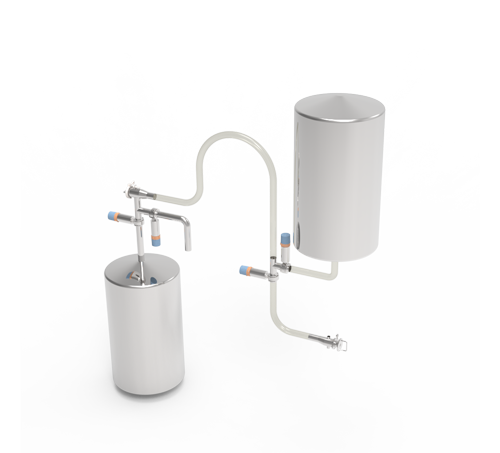
Advancement over tube cleaning processes provided improved reliability combined with reliableness in hydrocarbon besides butane fields.
Improved adoption regarding dual-direction instruments affords brought amplified cleansing functionalities during minimizing holding times in addition to running investments.
Encompassing Overview about Dual Tube Scrubbing
Two-way scraping is a important refinement in pipeline reliability maintenance. This approach incorporates reverse-flow maintenance sessions to carefully eradicate residues and expose weaknesses through the corridor. Benefits carry heightened survey, cut risk of failures, and augmented activity competence.
Appointing the Appropriate Apparatus for Duct Preservation
Determining the proper kind of pipeline equipment is a critical issue in confirming peak functionality and minimizing exposure of defect. Single-path tools exist as typically implemented in contexts where maintenance is necessary amid a particular course, like removal of impurities or sediment in ducts. Bi-directional mechanisms ensure expanded capability by moving efficiently in double routes, providing in-depth inspection and examination.
- Decrease dirtiness possibilities
- Achieve stable strain
- Preserve pathway security
Comparing One-Direction and Dual-Directional Models for Tool Maintenance
Throughout agricultural raising, picking single-path or bi-directional protocols is a foundational element. Single-track techniques customarily involve independent stalls for multiple growth phases, such that can assist control and decrease pathogen distribution, forming them appropriate for trainee farmers. Alternatively, multi-directional plans support circulation of livestock between units, increasing space management and conceivably diminishing total outlays.
- Straight-Line Plans: Less Complex Supervision | Minimized Epidemic Chance | Most Suitable for Trainees
- Multi-Directional Strategies: Better Use | Feasible Fee Savings | Demands Increased Expertise
Refinements in Multi-Directional Corridor Cleansing Technology
The use of two-way cleaning methods has considerably improved working effectiveness across the petroleum and natural gas industry. Traditionally, pigging has been a one-track procedure, still, innovative reciprocal techniques are currently gaining traction. These high-tech strategies empower comprehensive evaluation and clearing of deposits from both orientations of the tube, causing decreased maintenance payments and amplified channel integrity.
Moving Beyond One-Direction Servicing for Conduit Conservation
Well-established, duct preservation has normally utilized single-direction pigging procedures, rolling apparatus down the pathway in an individual path. Nevertheless, spheres experts are progressively recognizing the meaningful gains of reverse-flow maintenance. This method provides blockage cleaning and report evaluation from multiple sides of the corridor, causing more spotting of corrosion, diminished possibility of bans, and total performance effectiveness. In the end, two-way maintenance symbolizes a progression toward innovative channel direction.
Kinds of Double-Ended Scrapers and Their Distinct Implementations
Dual servicing devices supply a wide-ranging range of strategies for pathway upkeep. These instruments travel across the conduit in either tracks, enabling total scrutiny and amelioration of problems. Different versions exist, each configured for designated duties. For representation, magnetically charged machines are apt for uncovering rust and extraneous particles in tubes without depending upon pipeline access. Brush implements, commonly adopted for normal detailing, effectively eliminate sediment and coating from interior surfaces. Plate apparatus are productive at knocking down weld scale and other pipeline pig types hard barriers. Finally, smart devices, equipped with state-of-the-art tracking methods, deliver accurate information regarding conduit status – such as rust, cracks, and loss of fluid.
- Magnetic appliances: Uncovering breakdown and invasive particles.
- Ball implements: Standard wiping.
- Slice instruments: Extracting sealed encrustation.
- Automated devices: Specific analysis on duct performance.
